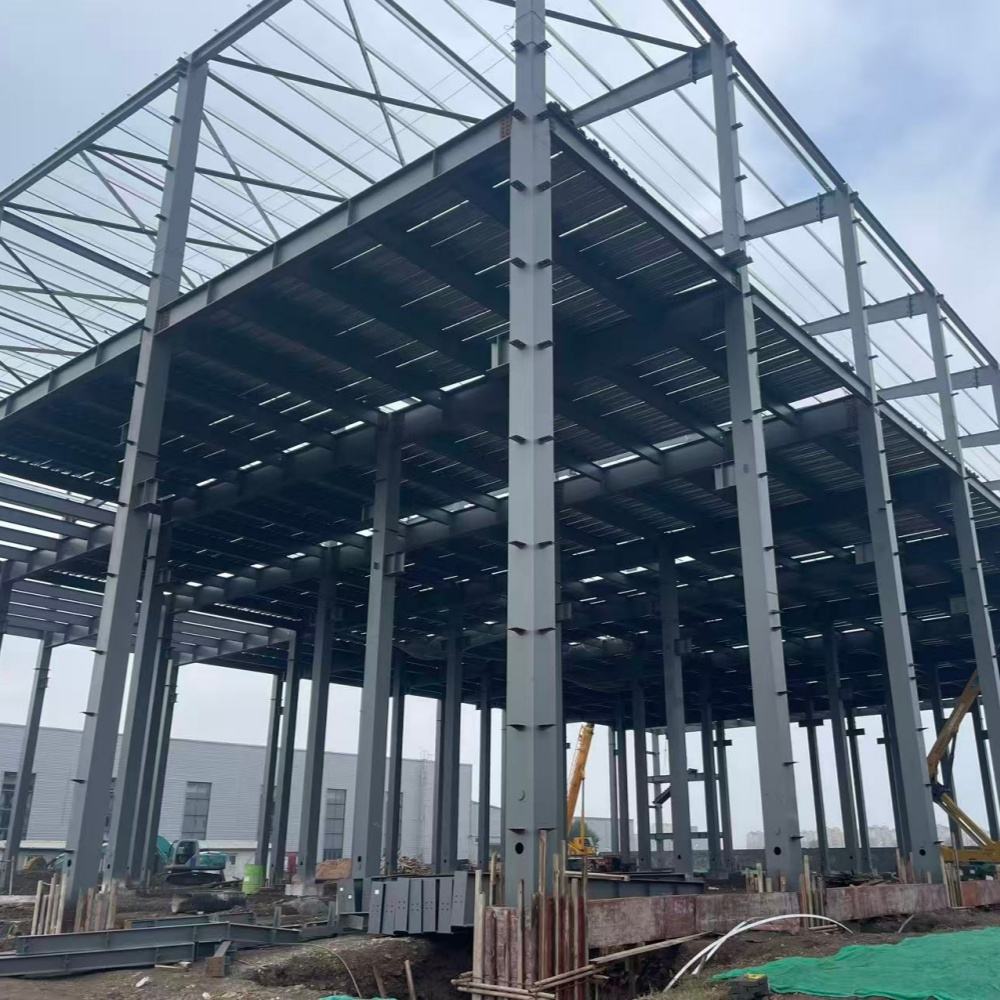
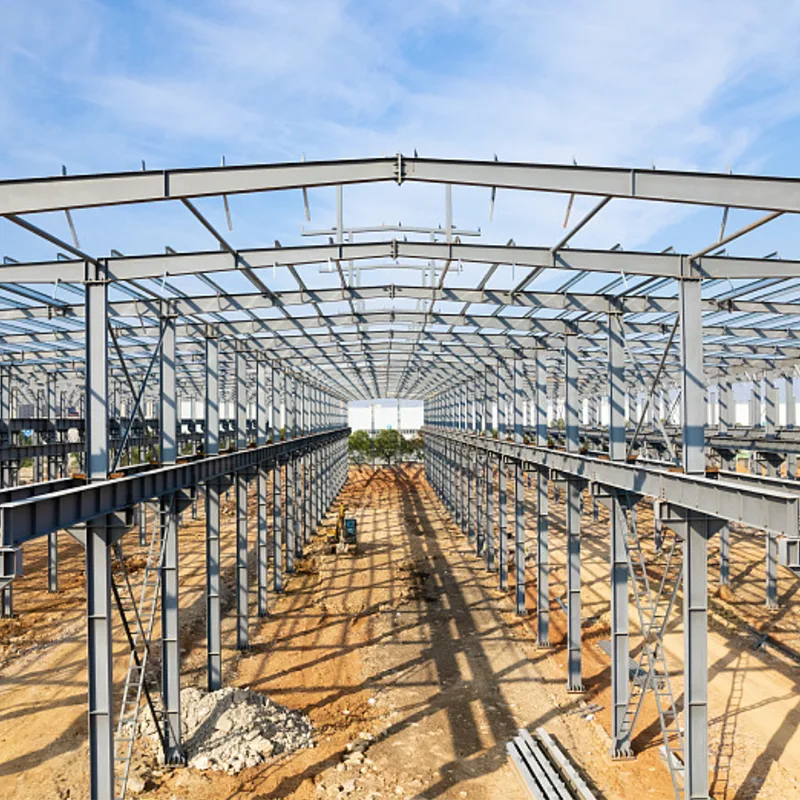
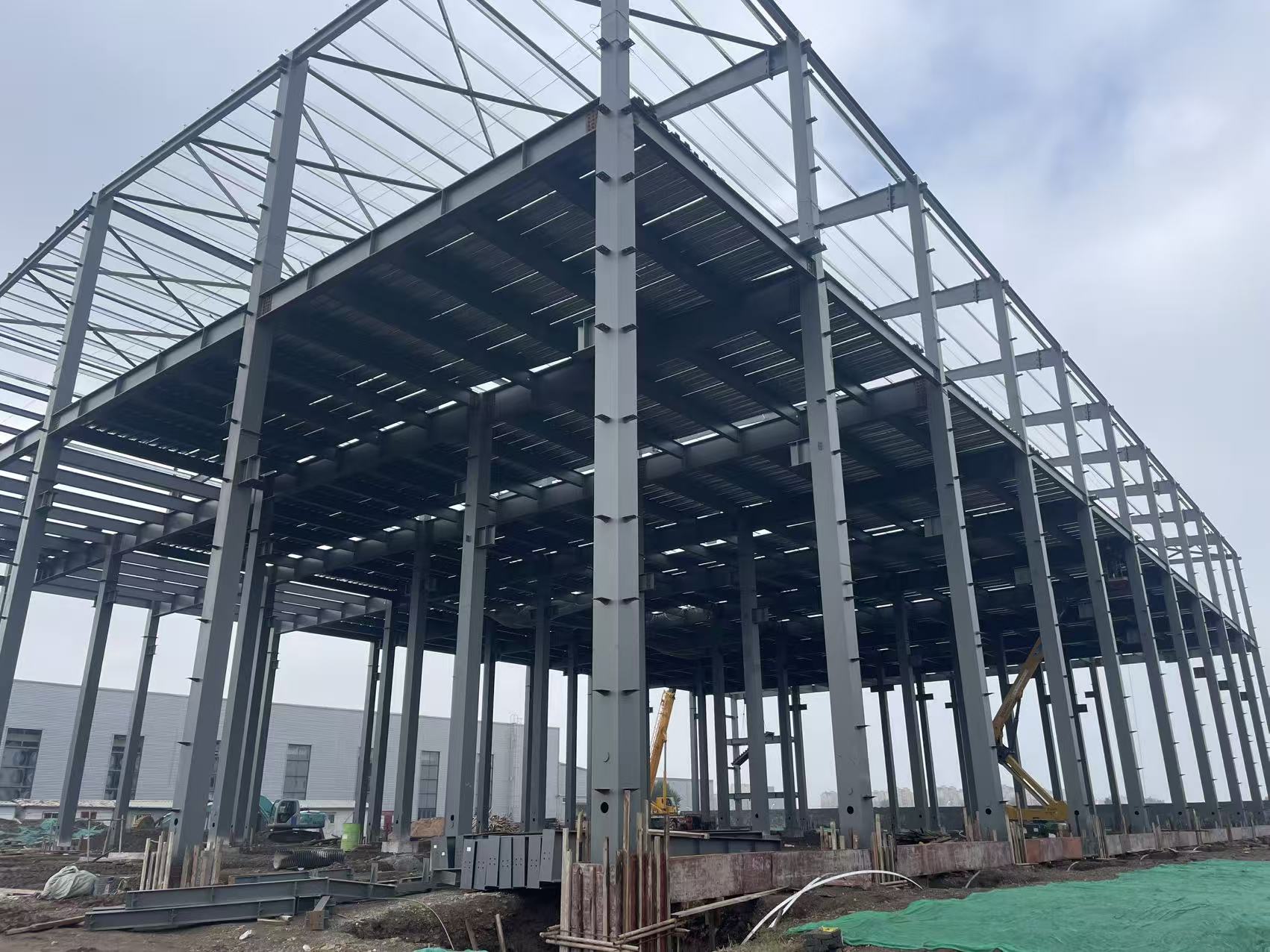
The installation accuracy control of industrial steel structure is the core link to ensure the safety, stability and service life of the structure. It is required to run through the whole process of component processing, transportation, installation and acceptance, and achieve the high accuracy goal through the systematic management of "design precontrol - measurement guidance - real-time correction - closed-loop acceptance".
1. Core index of precision control (according to national standard)
Axial position deviation: ≤ ± 3mm
Elevation deviation: ≤ ± 2mm
Verticality deviation: ≤ H/1000 and no more than 25mm (H is the height of the component)
These indexes shall be controlled step by step in processing, installation and connection stages to avoid error accumulation.
2. Key measures for whole-process accuracy control
1) Member processing stage: source pre-control
Numerical control cutting and automatic welding equipment shall be adopted to ensure blanking size and groove accuracy;
Implement virtual pre-assembly or physical trial assembly, verify node matching and control welding shrinkage deformation;
Three-dimensional coordinate inspection shall be carried out after processing to ensure that ex-factory components meet the requirements of detailed drawings.
2) Measuring system: high-precision guidance
Establish a unified control network: use the total station to establish the plane and elevation control network covering the whole site, which shall be consistent with the civil engineering datum, and regularly retest to prevent the settlement impact.
Configuration of measuring instrument:
Total station (angle measurement accuracy ≤ 2 ″, ranging accuracy ≤ 2mm+2ppm)
Level (accuracy ≤ ± 2mm/100m)
Application of Laser Verticality Instrument in Vertical Transmission of High-rise Buildings
Selection of measurement time: avoid the influence of sunshine temperature difference, and give priority to the key measurement in the morning or in cloudy days.
3) Installation process: dynamic correction
Installation of steel column:
Monitor the perpendicularity with a theodolite or total station immediately after hoisting, and adjust the bottom plate bolts with a jack when the deviation exceeds the limit;
The first steel column is calibrated as a benchmark, and the subsequent columns are rechecked for the group perpendicularity with a laser scanner.
Steel beam installation:
The axis control line shall be marked at the beam end before installation, and the position shall be checked by the pulling line method or total station;
For large-span beams, the camber value shall be preset, and the actual deflection change shall be monitored after installation.
Setting of temporary support: reasonably arrange the support points to prevent the members from destabilization or deformation. Unloading shall be carried out synchronously in different stages to avoid sudden change of stress.
4) Connection accuracy control
High-strength bolt connection:
Bolts shall be inserted freely, and gas cutting and reaming are strictly prohibited;
The initial screwing and final screwing shall be carried out step by step, and the torque value shall be checked after the final screwing to ensure that the friction surface is fitted ≥ 70%.
Welding control:
Formulate special welding sequence and control interpass temperature;
Re-measure dimensions after cooling to normal temperature after welding to avoid thermal deformation from interfering with accuracy judgment.
5) Assistance of advanced technology
Three-dimensional laser scanning technology: compare the measured point cloud data with BIM model, quickly identify the installation deviation, and the accuracy can reach millimeter level, which is applicable to complex nodes and large-span structures.
BIM+digital twin: realize linkage between virtual construction and site construction, find out collision problems in advance and optimize hoisting path and installation sequence.
We use cookies to offer you a better browsing experience, analyze site traffic and personalize content. By using this site, you agree to our use of cookies. Privacy Policy